

As a Customer,
Do you want to shop online with ease? Are you a fan of eye-catching intelligent gadgets such as smartwatches and want the freedom, flexibility, and convenience of shopping with just one click?
As a Seller,
Sell faster. Sell better. Sell more.
”Sell anything in seconds – in person, online, on any screen. Sell easily”
The world of e-commerce is developing at times. It moves at a breakneck speed. Meanwhile, you could argue that e-commerce is on the edge of becoming entirely headless. Consumers are becoming accustomed to consuming material and making purchases through various channels. From IoT devices to advanced web applications, the requirement for e-commerce businesses to keep up with the demands and desires of customers and competitors is becoming increasingly important today.
The strong separation of front-end and back-end is undoubtedly one necessity that has contributed significantly to improving user experience and, as a result, to a shift in purchasing behavior in recent years.
This separation, combined with the simultaneous introduction of technologies such as Progressive Web Apps (PWA), means that new features can be developed faster, and customers may be addressed more precisely than before.
How do you, as a user can, do shopping with headless e-commerce functionality?
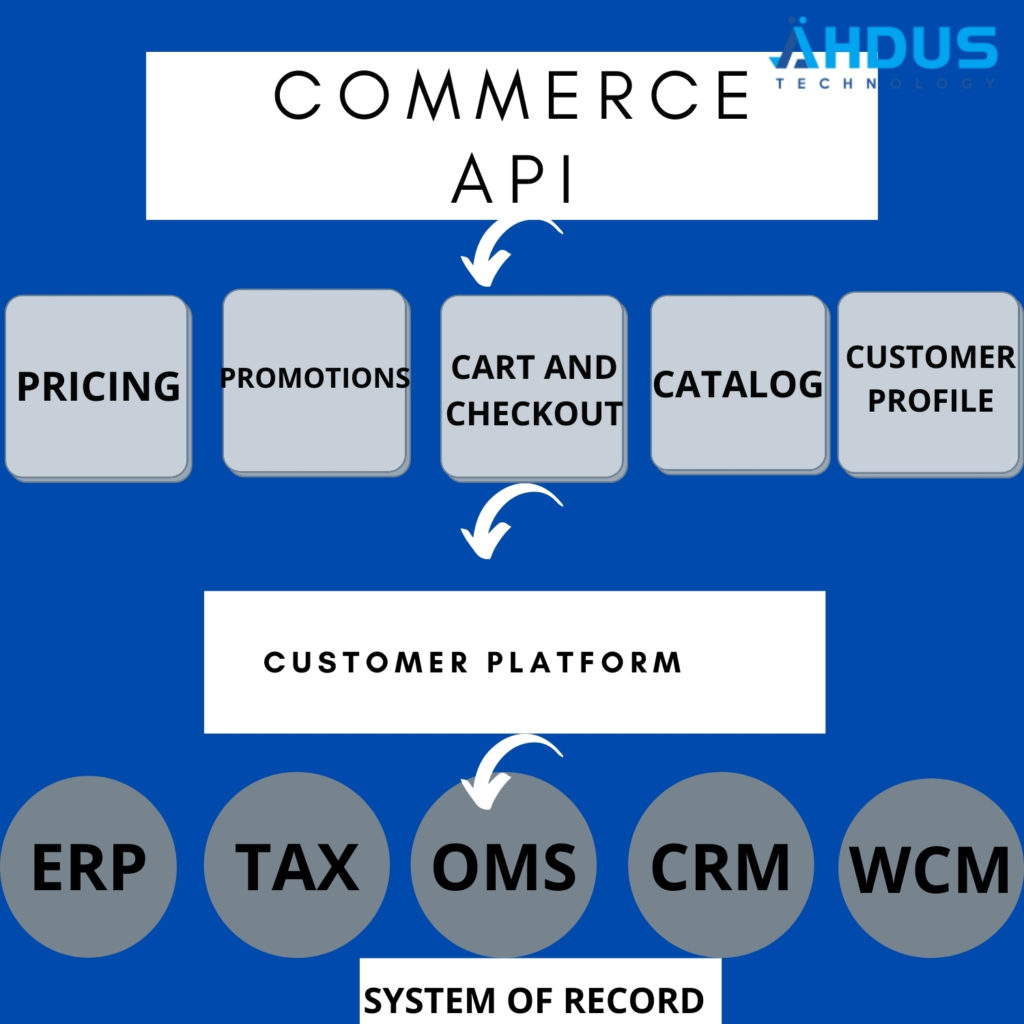
A headless e-commerce system, like a headless CMS, transfers requests from the front end to the back end via API calls, effectively separating them. When a user presses the “Buy Now” button on their smartphone, the user interface (front-end), calls a function of the headless e-commerce system’s API to process the order. The headless e-commerce system answers the API call with the order status, which is subsequently shown to the customer by the front end.
This process is so quick and independent of the user interface that a user can do shopping within seconds from his/her touch screens like a smartwatch.
That is why headless e-commerce is becoming more famous and growing faster for e-commerce owners. Simply give a quick and hassle-free online shopping experience to your customers.
What is the process of headless commerce?
A headless e-commerce system transfers requests from the front end to the back end via API calls, effectively separating them.
When a user presses the “Buy Now” button on their smart-watch or smartphone, the user interface (front-end), calls a function of the headless e-commerce system’s API to process the order. The headless e-commerce system answers the API call with the order status, which is subsequently shown to the customer by the front end.
This process is so quick and independent of the user interface that a user can do shopping within seconds from his/her touch screens like a smartwatch.
“Classic” E-Commerce vs. “Headless” Commerce:
Understanding the difference between headless commerce vs. classic commerce will help you better see why the former is the clear solution for modern eCommerce.
Headless commerce originated as a response to traditional commerce’s technical problems. The most significant difference between headless and traditional commerce is the ability to quickly roll out updates with little or no effort on the backend and no disruption to the consumer experience.
The following are three of the most prominent differences between classic Ecommerce architecture and modern headless e-commerce architecture, in our opinion:
- Flexibility in front-end development E-Commerce in its “Classic” Form When it comes to modifying the design and operations of a typical e-commerce system, front-end developers soon run into several limitations. Changes and adjustments, for example, can take a long time because nearly every application level must be touched and checked. By utilizing cutting-edge technologies, a Commerce without a Leader UI developer has many alternatives at their disposal to build a perfect user experience and match end customers’ demands for a speedy and easy-to-use interface. Traditional e-commerce platform developers’ complexity and context knowledge are reduced (at least in part) to knowing which API function to call. As a result, developers can concentrate solely on creating the most user-friendly user interface possible.
- Individualization and customization E-commerce in its “classic” form Traditional e-commerce systems offer a “one-size-fits-all” approach, with pre-defined content, components, and functionality for both your customers and administrative users. While a traditional e-commerce solution can meet all of the requirements, it is not as elegant as a stand-alone and modern user interface. As a result, the benefit may soon become harmful as the number of adjustments and extensions required grows. Changes frequently impact the system significantly and result in unintended consequences, such as changes to one component having unintended implications elsewhere. There can be no commerce without a leader. In a headless commerce solution, the separation of backend and frontend decreases complexity while offering developers more freedom and independence when developing the user interface and creating the user experience. If the user interface is designed from the start, the backend just needs to be built once.
- Adaptability and flexibility In “traditional” e-commerce, the front end of old systems is inextricably linked to the back end and hence to the business logic. There is usually minimal room for quick and easy alterations due to this. All platform levels must be frequently adapted, from the GUI to the database. As a result, little adjustments can have an enormous impact and require significant effort and money. Because Headless Commerce separates the front and back end, customization possibilities are almost limitless. One or two front-end devs are generally enough to make changes. As a result, significant and little changes, such as adding a new field to the client account or installing a custom checkout, may be made quickly and easily.
What are the benefits of shifting towards headless e-commerce as a Large Retailer Brand?
Sell faster. Sell better. Sell more. Sell like a Startup.
The most important advantages of headless e-commerce, in particular, continues to demonstrate the actual value of a headless commerce platform and how it may assist retailers in avoiding the issues that come with using a traditional commerce platform,
- A headless commerce platform allows businesses to swiftly update subsystems like the front end without affecting the backend system. For example, the front-end changes can be made quickly to include the latest technologies.
- Large retail brands that employ a traditional platform frequently upgrade their platforms, using headless platforms in traditional omnichannel, only the elements of the platform that are affected are updated by separating the backend and frontend. This enables a speedy response to consumer requests or market changes, boosting competitiveness dramatically.
- New technologies can be swiftly added as soon as they become available with a headless commerce system. This is a great way to create unique client experiences. Marketing teams can now establish and grow many brands across multiple locations, business units, and portfolios.
- People also want to acquire products from companies that are aware of their needs across all channels. This goes well beyond the conventional “customers who purchased X also purchased Y.” So, by making information available to a personalization device, the headless commerce platform already knows what a customer bought and can utilize it to fuel a website, online store, mobile app, and social channels.
CONTRIBUTION OF AHDUS TECHNOLOGY:
Our E-commerce development team is already aware of the modification and is working to implement it. Headless E-Commerce cart plugins for the retail industry of Denmark. This plugin serves check-out options fully automated without using any user interface for all devices.
Our Plugin development is tested for Desktop, Mobile, Smart-Watch, and any other gear.
Since we are leading in headless e-commerce, we are well-versed in the skillset of using headless commerce architecture for your online stores e.g., Magento, Shopify, Opencart, Woocommerce, ProMode